We may earn a commission through affiliate links, at no separate charge from VerdictSift. Ordinary manufacturer links are also included. How our links work.
Begin with one general-purpose chef's knife that feels comfortable and fits your cutting board. Compare grip, balance and the care routine you can maintain. Add specialized knives later for specific tasks rather than buying a large set before learning what you use.
Your options, at a glance
Start with the way you will use it, then decide which compromise makes sense.
| Option | A good fit for | The tradeoff |
|---|---|---|
| General-purpose chef's knife | Most everyday meal preparation | Still needs specialized tools for some jobs |
| Smaller utility knife | Compact tasks and smaller ingredients | Less room for larger preparation |
| Large knife set | An established need for several shapes | Often includes rarely used pieces |
Buy for the food you prepare
Think about ordinary dinner preparation: chopping vegetables, slicing cooked food and cutting herbs. A general-purpose chef's knife can handle many of these tasks, but it is not a universal tool for bones, frozen food or every specialized job. Read its intended use. If your routine is mainly sandwiches and fruit, a smaller utility knife may be the first useful purchase instead. Choose around the tasks that occur several times a week. A dramatic blade in a photograph is not necessarily the most comfortable tool for your kitchen.
Handle comfort is personal
A handle can look refined and still feel slippery, bulky or cramped in your hand. When possible, hold the knife safely in a shop and notice where your fingers settle. Do not judge comfort from another person's recommendation alone. Consider whether you prefer a lighter feel or more weight and whether your grip changes during longer preparation. The transition between blade and handle should suit your hand. Buying online makes a clear return policy particularly useful, because a specification sheet cannot fully describe balance and grip.
Match blade size to your board
A long blade needs enough working space. Compare the knife with your primary cutting board and the clear counter area around it. A smaller kitchen does not automatically require the shortest knife, but a large blade on a tiny board can feel awkward. Consider the size of ingredients you regularly cut. A manageable all-purpose size is usually more useful than an extreme chosen for appearance. Keep the surrounding work area clear and use a stable board. Knife and board should be considered as a working pair.
Construction labels are not a ranking
Terms describing steel, manufacturing method or handle construction can be informative, but they do not replace the practical questions. How should the knife be cleaned? How is its edge maintained? Is appropriate sharpening support available? A costly knife with a maintenance routine you will not follow can be disappointing. Avoid assuming that a particular country, finish or decorative pattern guarantees suitability. Compare published details for the exact model, and focus on intended use, handling and support before treating technical labels as a reason to spend more.
Plan edge maintenance before purchase
Every working knife eventually needs suitable care. Read the maker's guidance for sharpening and any honing tool, since not every sharpener suits every blade. If you prefer a professional service, check that one is available and appropriate for the knife you choose. Do not buy a complicated maintenance kit merely because it is bundled with a blade. Start with a clear plan you can follow. A well-maintained modest knife can be more useful in daily cooking than a premium one that becomes frustrating because its edge is neglected.
Make washing and storage straightforward
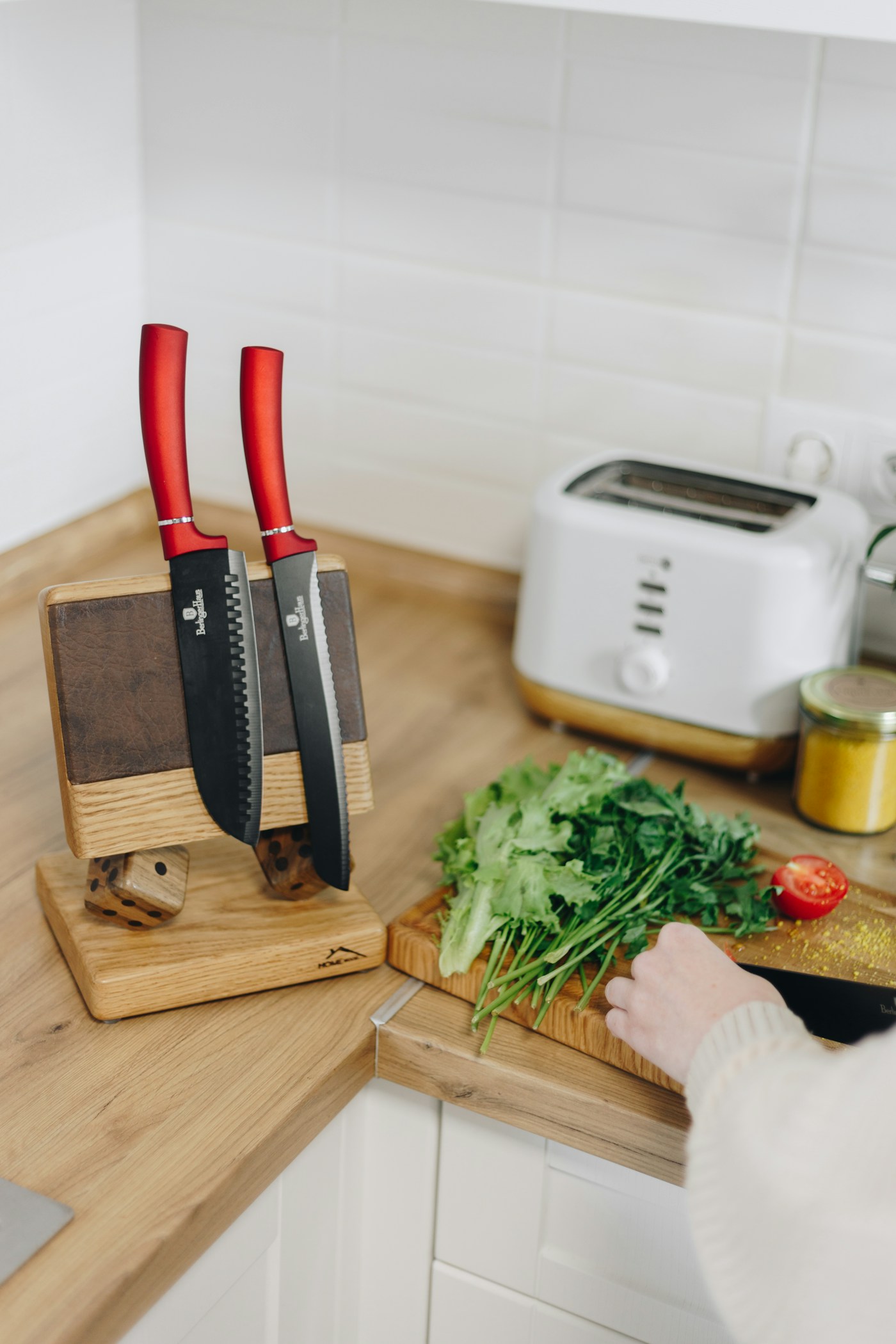
Follow the cleaning instructions, including any hand-wash guidance, and store the knife so the edge is protected and access is controlled. A fitted sheath, suitable drawer insert or properly installed storage system can work depending on the household. Do not leave a sharp knife loose among utensils. Consider children, visitors and shared kitchens when deciding where it lives. A large counter block can consume valuable prep space and may include slots you never fill. Choose storage around the actual knives you own rather than the collection a retailer hopes you will buy.
Build the collection slowly
Use the first knife for ordinary cooking and note the jobs it does not suit. A bread knife or small paring knife may later be justified, but each addition should have a purpose. Compare individual purchases with sets by counting only the useful pieces. Include safe storage and maintenance in the budget. When the knife arrives, inspect it and read the care instructions before using it. The aim is a small set of familiar tools that make preparation comfortable, not a display of unfamiliar blades taking over the counter.
Common questions
Is a knife block necessary?
No. Safe storage can take several forms, including an appropriate drawer insert or sheath. Choose a method that protects the edge and suits who can access the kitchen.
Should I buy a sharpener with the knife?
Only after checking compatibility and the maker's guidance. An unsuitable sharpening tool can be a poor purchase. Decide whether you will maintain the knife yourself or use an appropriate professional service.
Sources & further reading
This guide combines practical shopping considerations with information from the sources below. It does not represent hands-on product testing.
Source review: November 20, 2026. Product designs and seller terms can change.
Send a correction or a question