We may earn a commission through affiliate links, at no separate charge from VerdictSift. Ordinary manufacturer links are also included. How our links work.
For one person who enjoys a short morning ritual, a compact manual brewer can be enough. For several cups on a rushed weekday, a small automatic drip machine is often the more useful purchase. Measure the space needed to fill and clean it, not just the footprint.
Your options, at a glance
Start with the way you will use it, then decide which compromise makes sense.
| Option | A good fit for | The tradeoff |
|---|---|---|
| Manual pour-over | One or two deliberate cups | Needs a kettle and attention |
| Compact automatic drip | Several weekday cups | Requires reservoir and carafe space |
| Pod machine | Quick individual servings | Compatible consumables become recurring cost |
Rehearse your weekday morning
Imagine making coffee while packing lunch and looking for your keys. A manual brewer can be pleasant when you have time to pour and clean, but less appealing when everyone leaves together. Count how many cups are needed and whether they are brewed at once. A machine that makes a large batch can suit a shared household; a single-cup routine can waste less space for one drinker. Choose around the normal morning rather than the occasional leisurely weekend you wish happened every day.
Measure the operating space
A coffee maker's width and depth do not tell you whether its lid opens under a cabinet. Check the clearance required for the water reservoir, filter basket and carafe. Think about where steam escapes and follow the manufacturer's placement instructions. A removable reservoir can be useful if the machine sits far from the sink, while a fixed reservoir may require a separate jug. Include the kettle and grinder if a manual setup needs them. Several small accessories together can occupy more counter space than one compact machine.
Compare manual and automatic routines
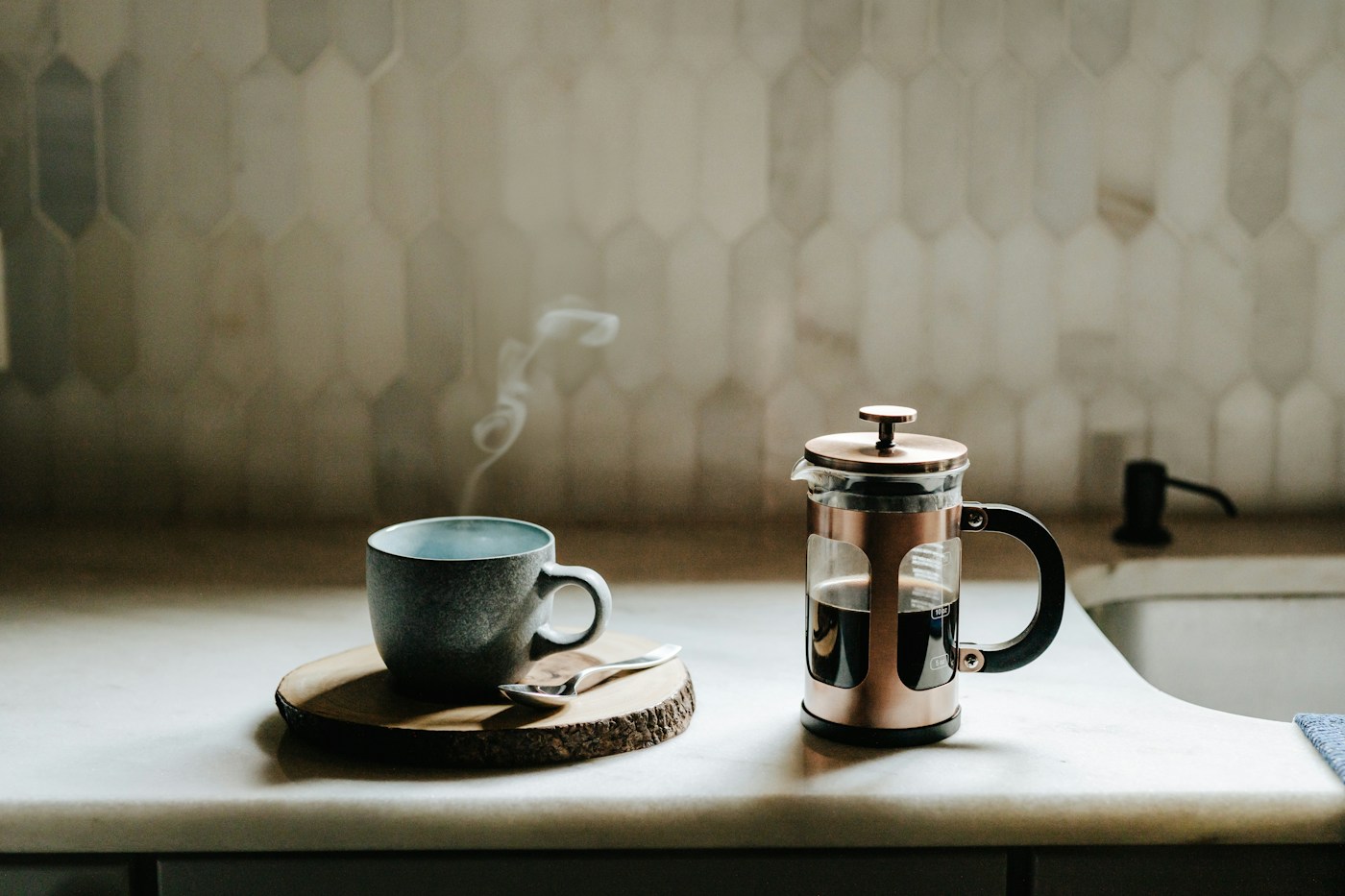
Manual brewers trade automation for compactness and control. You supply the hot water, timing and attention, and cleanup depends on the filter and brewer design. Automatic drip machines handle more of the process but add a reservoir, controls and internal water path that need maintenance. A pod system can simplify portioning, while tying you to compatible consumables. None is universally best. List the steps you dislike in your current routine and choose the system that removes those steps without adding a different inconvenience.
Capacity labels need translating
A manufacturer's cup is not necessarily the mug you use at home. Check the stated water volume and compare it with your actual serving size. Also check whether a larger machine supports the small batches you make most often. A tall travel mug may not fit below the outlet of a single-serve machine. If two people drink at different times, consider how coffee will be held and whether you prefer brewing again. A capacity claim is useful only after it is translated into your household's daily cups.
Budget for the whole setup
Include filters, a suitable grinder if needed, a kettle for manual brewing and any cleaning products specified by the maker. Do not assume the machine comes with every accessory shown in the photograph. A modest brewer with a repeatable routine can be more satisfying than a feature-heavy machine that crowds the kitchen. If you already own a kettle and enjoy pre-ground coffee, try a straightforward manual option before buying a complete counter setup. Avoid paying extra for app controls if you still have to prepare water and coffee by hand.
Make cleaning part of the purchase
Look at the parts you will remove daily and the manufacturer's descaling instructions. Can you reach the reservoir opening, lift out the filter basket and rinse the carafe comfortably in your sink? Check which parts are dishwasher-safe instead of assuming the whole assembly is. A narrow opening or complicated lid can become a daily irritation. Replacement carafes, filters and seals also matter. A useful machine should be maintainable, not merely convenient during the first week when every part is new and clean.
Buy the simplest setup that solves it
Write down three non-negotiables: servings, available clearance and acceptable cleanup. Use those to eliminate unsuitable machines before comparing finishes. Read the current product manual and return policy for the exact model. Once it arrives, check fit and parts before brewing, then establish a repeatable routine. If the coffee needs adjustment, change one variable at a time rather than immediately buying accessories. The goal is a dependable morning drink with a manageable setup, not a collection of equipment competing for a small kitchen's only clear work surface.
Common questions
Do I need a separate grinder?
Not necessarily. A brewer can work with coffee ground appropriately for its method. A grinder adds flexibility but also cost, noise and storage. Buy one when changing beans or grind settings is part of the routine you actually want.
Should I choose the smallest machine available?
Choose the smallest setup that meets your servings and access needs. An extremely compact machine can still be awkward if the tank is hard to fill or your mug does not fit.
Sources & further reading
This guide combines practical shopping considerations with information from the sources below. It does not represent hands-on product testing.
Source review: November 20, 2026. Product designs and seller terms can change.
Send a correction or a question